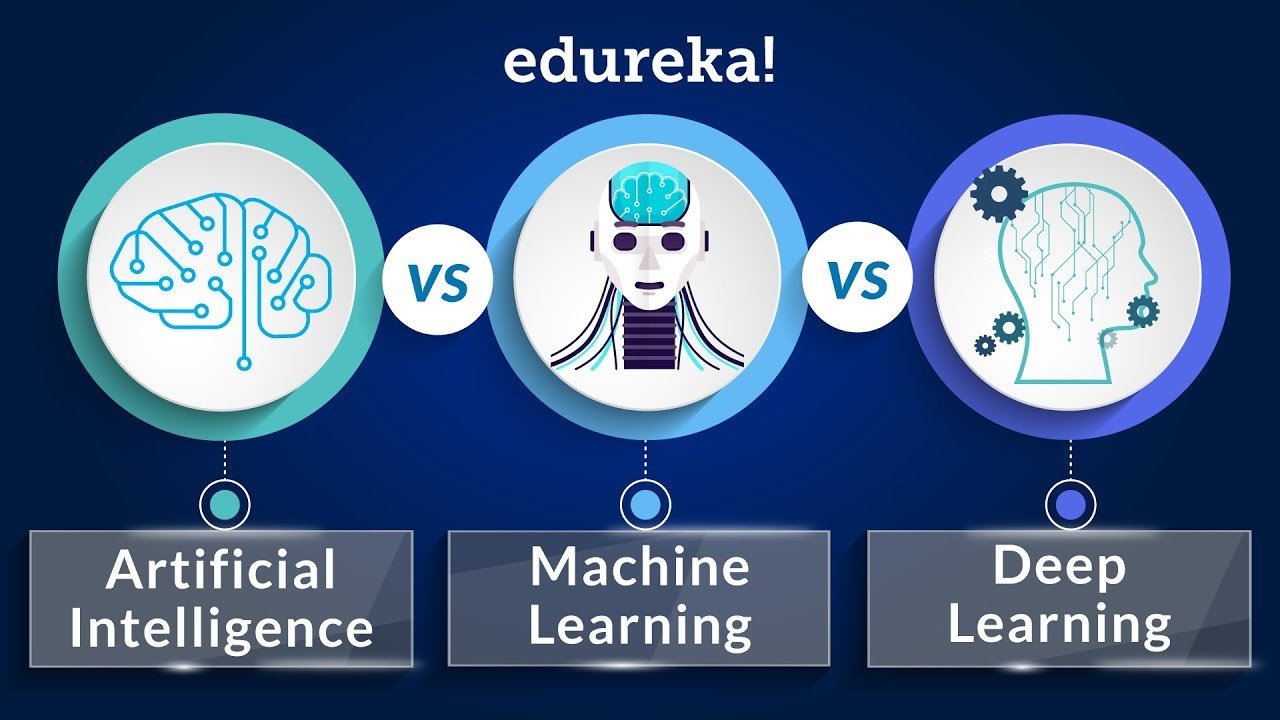
Artificial Intelligence (AI), Machine Learning (ML), and Deep Learning (DL) — these three terms are often used interchangeably, but they are not the same. If you’re getting into tech, data science, or working with modern tools like ChatGPT or self-driving systems, understanding the difference between AI, ML, and DL is essential.
This guide breaks down the core concepts in simple, beginner-friendly language.
1. What is Artificial Intelligence (AI)?
Artificial Intelligence, or AI, is the broadest concept. It refers to the ability of machines to perform tasks that normally require human intelligence.
These tasks include:
- Decision-making
- Understanding language
- Recognizing images
- Solving problems
- Learning from experience
Examples of AI:
- Google Assistant or Siri understanding your voice
- Facebook tagging your friends in photos
- Chatbots answering customer queries
Goal of AI: To simulate human intelligence in machines.
2. What is Machine Learning (ML)?
Machine Learning is a subset of AI. It allows machines to learn from data and improve over time without being explicitly programmed for every task.
In simple terms, ML is how a machine:
- Learns patterns
- Makes predictions
- Improves through experience
Examples of ML:
- Netflix recommending shows based on your watching habits
- Email filtering spam
- Predicting stock market trends
Types of ML:
- Supervised Learning – Uses labeled data
- Unsupervised Learning – Finds hidden patterns in data
- Reinforcement Learning – Learns by reward and punishment (used in games and robotics)
3. What is Deep Learning (DL)?
Deep Learning is a subfield of Machine Learning. It uses artificial neural networks that mimic how the human brain processes information.
It is called “deep” because it has many layers of algorithms (neurons) working together.
Deep Learning excels in tasks like:
- Image recognition
- Natural language processing (NLP)
- Voice recognition
- Self-driving cars
Examples of Deep Learning:
- ChatGPT understanding and generating natural language
- Tesla recognizing stop signs and pedestrians
- YouTube generating automatic subtitles
Quick Comparison Table:
| Feature | AI | Machine Learning | Deep Learning |
|---|---|---|---|
| Scope | Broadest | Subset of AI | Subset of ML |
| Inspired By | Human intelligence | Data learning | Human brain structure (neurons) |
| Human Involvement | High to moderate | Moderate | Low (automated feature learning) |
| Data Requirements | Varies | Medium | High (Big Data) |
| Hardware Needed | Normal computer | Normal to moderate | Powerful GPU systems |
| Examples | Siri, chatbots | Recommendation systems | Face/voice/image recognition |
Real-World Example: Self-Driving Car
To understand how these three work together, let’s take a self-driving car:
- AI: Makes decisions — when to slow down, stop, or change lanes
- ML: Learns driving patterns from real data — like how humans drive in traffic
- DL: Processes visuals — identifying pedestrians, vehicles, traffic lights using camera data
So, Deep Learning is used inside Machine Learning, and Machine Learning is used inside Artificial Intelligence.
Conclusion
- Artificial Intelligence is the big umbrella that includes all smart machine behavior.
- Machine Learning is one way to achieve AI, using data-driven learning.
- Deep Learning is a more advanced technique within ML that uses neural networks.
Each plays a critical role in how modern technologies like voice assistants, recommendation engines, and automation systems work today. Understanding the differences helps you choose the right tools — whether you’re a developer, student, or entrepreneur in 2025.